

Pay-Per-Request Pricing for AI Agents (Idle = $0)
Subscriptions were built for humans who log in and out. Agents sit idle, then burst. Here's why per-call billing — idle costs nothing — is the right unit for agents.

Most billing models for AI infrastructure were designed for humans who log in, do things, and log out. Agents don't work that way. An agent might sit idle for six hours and then fire four hundred calls in a minute. The subscription model asks you to pay a flat rate for that unpredictability — a bit like renting a car by the year to drive it twice.
The seat was the wrong unit
Per-seat and per-plan pricing assumes a steady user: you provision for the peak and pay for the peak whether or not you reach it. When the actor is an agent, the peak is meaningless — load is bursty, spiky, hard to forecast. Paying a fixed monthly floor for a workload that's asleep most of the day isn't a pricing model, it's a subsidy you pay the vendor.
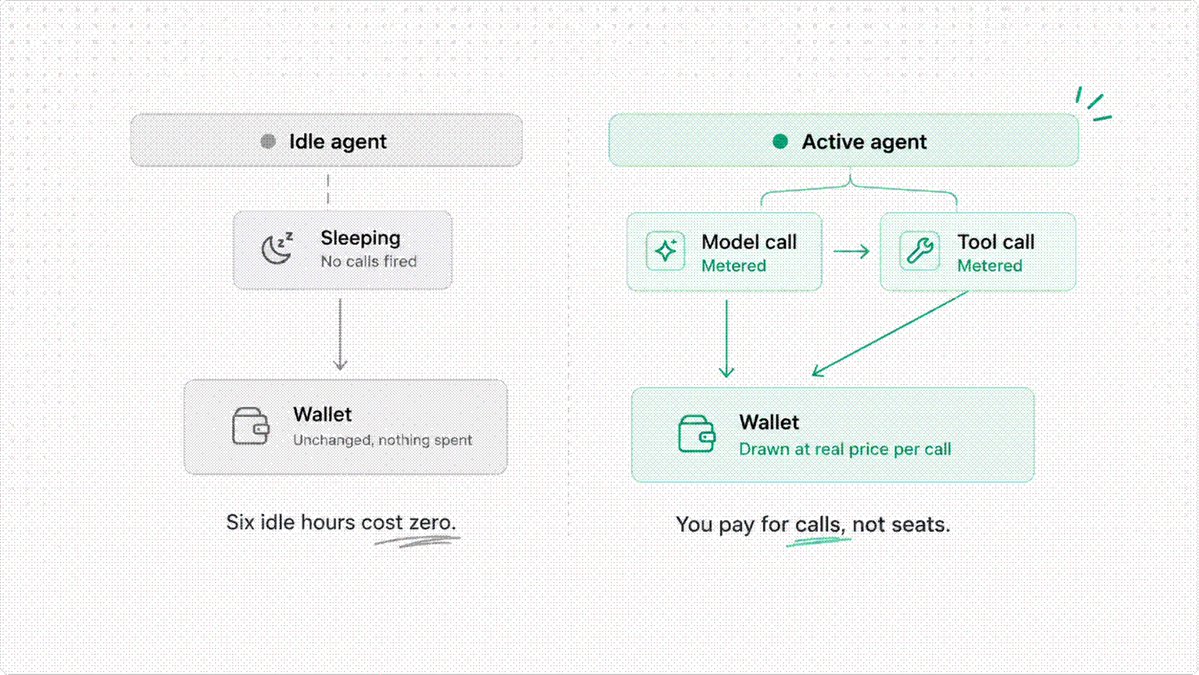
Deva Agent Key drops the seat entirely. There's a prepaid wallet, and each request draws from it at the provider's real price. When the agent does nothing, nothing is spent. No minimum, no floor, and the balance doesn't expire. The unit of billing is the call — the only unit an agent actually generates.
Metering that sees the whole run
An agent run isn't a single model call. It's a model call, then a tool call, then a retry, then another model call reasoning about what came back. Most billing surfaces meter the model and quietly ignore the rest — so your real cost lives somewhere you can't see.
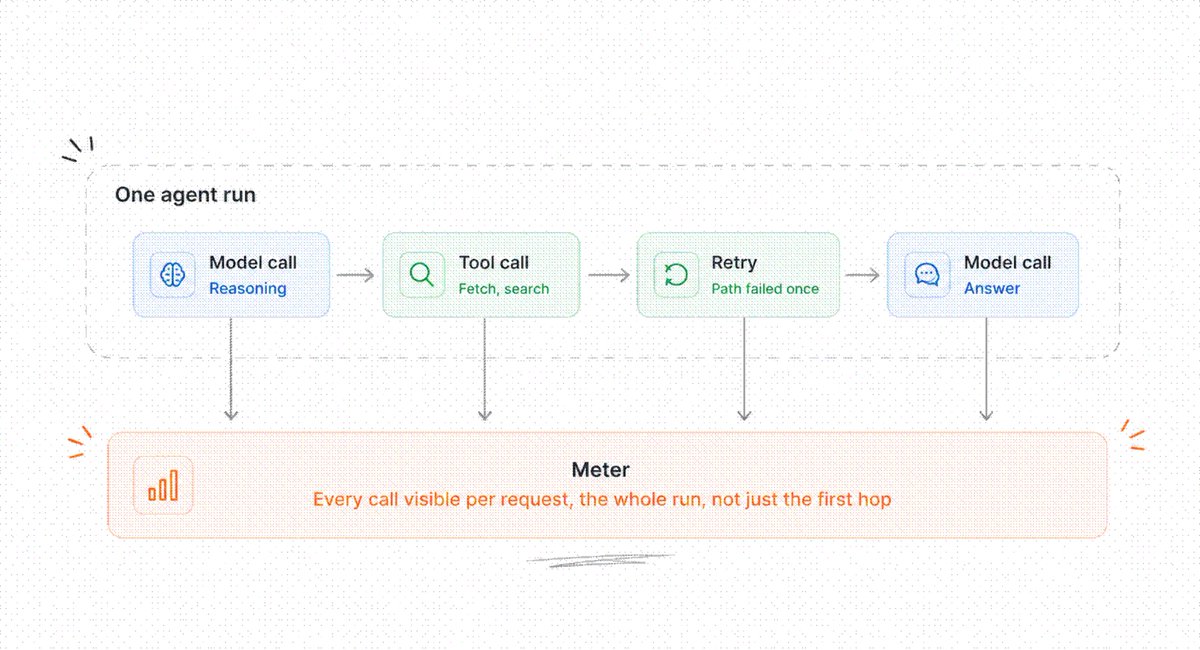
Agent Key meters both model calls and tool calls from the first request. Spend is visible per request, across the full run, so an agent's cost is a number you read rather than one you reconstruct from three dashboards at month's end. You can't optimize a cost you can't observe.
Fallback belongs in the infrastructure
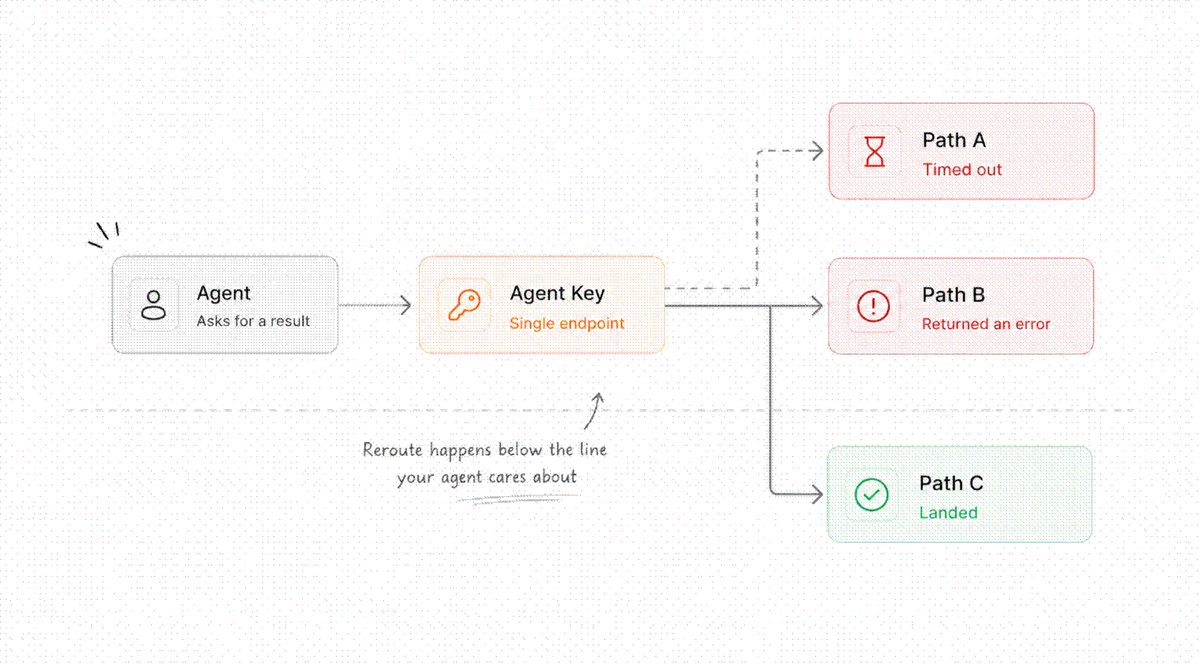
Providers fail — a tool path times out, a model errors, an endpoint has a bad afternoon. In a stacked setup, handling that is your problem, and you end up writing retry logic that's really just plumbing in a trench coat. Agent Key retries across alternative provider paths automatically when one fails. Your agent asks for a result and gets one; the rewiring happens below the line you care about.
The economics of doing nothing
The quiet advantage of usage-based, real-dollar pricing shows up when you build and test. Create a key, use the free daily allowance, and start before you top up anything. When you do, the only fee is a flat 5% on top — so $10 of usable credits costs $10.50. No tiers to decode, no annual commitment.
The idle case is where the design earns its keep. A subscription charges you the same whether your agent is a productivity monster or a very expensive way to keep a server warm. Wallet-based metering charges for the calls that happened and nothing for the ones that didn't.
Agents made the old billing model obsolete the moment they stopped behaving like users. You don't need a seat, a plan, or a floor — you need one key, one wallet, and a bill that reflects what actually ran. Your agent can sleep in guilt-free; the meter only moves when it does.
Next
- Where the wallet sits in the stack: The AI agent infrastructure layer you can't skip.
- The math on stacked plans: Stop paying for unused API subscriptions.
- A real run, priced in cents: How to research any competitor with an AI agent.